

If your house has failed two listings and you can’t work out why buyers keep walking after the inspection, asbestos is worth ruling out. It hides in ordinary places. Old vinyl floor tiles in the kitchen and laundry room, pipe insulation wrapped around the crawl space lines. Most sellers are never told that a buyer with conventional financing will walk from that, or that there is another way to sell. That second part is where our team at Prime Cash Home Buyers comes in.
What Is Asbestos and Why Does It Matter for Georgia Home Sales?
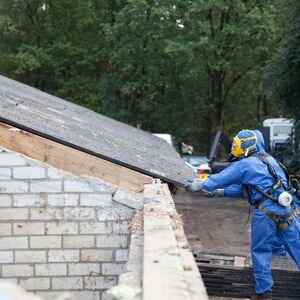
Some sellers hear the word asbestos and immediately think their house is unsellable. That’s not accurate. Real trouble lies not in the presence of the mineral fiber; it’s how it’s managed and disclosed.
Asbestos is a naturally occurring mineral that builders used heavily throughout the mid-20th century because of its fire resistance and insulating properties. In Georgia homes, you’ll find it in popcorn ceilings, vinyl floor tiles, asbestos-cement boards, pipe insulation, roofing shingles, and attic insulation. Homes built before 1980 frequently contain asbestos-containing materials (ACM) in exactly those spots. Atlanta-area cities like Decatur, East Point, College Park, Tucker, and Chamblee are full of them. So is Richmond County, where Augusta’s older neighborhoods, such as Summerville and Forest Hills, sit next to whole blocks of mid-century ranch and split-level houses. I’ve walked enough of these basements and crawl spaces to know it shows up more often than sellers expect.
Sellers face the issue that conventional buyers using mortgage financing often can’t close on a home with known, deteriorating ACM. Lenders get cold feet, appraisers flag it, and the sale dies at inspection. I’ve watched this pattern repeat in Mableton, College Park, and Marietta, and closer to home in Hephzibah and Thomson. The house was fine; the financing structure wasn’t compatible with the condition.
Georgia’s asbestos regulations operate within a framework that aligns with federal EPA standards while also establishing state-specific requirements for handling, removal, and disposal. The dual-layer regulatory structure is what catches many Georgia sellers off guard. They assume one set of rules applies when, in fact, there are at least five overlapping regulatory references that can govern any given project.
How Do You Know If Your Georgia Home Has Asbestos?
The age of your home is the first clue. Decatur’s median home construction year is 1975, with more than 32% of homes predating 1950, which means a huge portion of that market has genuine ACM risk built right in. Augusta’s median construction year is 1978, which puts a big share of Richmond County housing in the same window. If your home is in that vintage range anywhere in Georgia, from the CSRA to metro Atlanta, assume there’s something to look at. Assume there’s something to look at.
Common places for asbestos-containing materials in Georgia homes include popcorn ceilings applied before 1978, 9×9 and 12×12 vinyl floor tiles with black mastic adhesive (the sticky stuff under old linoleum, too), pipe wrap on hot water lines in basements or crawlspaces, and roofing shingles or asbestos-cement siding panels on exterior walls.
A thorough inspection must be performed by an accredited asbestos inspector and should include a report identifying all ACMs that might be disturbed during renovation or demolition. For sellers, that means a pre-listing inspection isn’t just smart, it lets you identify and address problems before buyers’ home inspectors start calling the shots (and they will call them).
Sellers find this out the hard way all the time. A house sits through two rounds of showings and picks up zero offers, and the answer has been in the crawlspace the whole time. Original floor tiles and deteriorating pipe insulation are classic 1960s construction signatures, easy to spot once you know to look. Once you know what you are working with, the path forward gets much shorter.
What Are the Real Health Risks of Asbestos Exposure?
The popular idea about asbestos is that any trace of it is an emergency requiring immediate evacuation. Reality is more specific than that.
Asbestos fibers become dangerous when they’re released into the air and inhaled. Intact, undisturbed ACM, such as solid floor tiles in good condition or sealed pipe insulation, generally poses a low risk. The danger spikes when materials are friable, meaning they can crumble and release fibers into the breathing zone. Friable asbestos-containing material is defined as any material containing more than one percent asbestos that, when dry, can be crumbled, pulverized, or reduced to powder by hand. Crumbling pipe insulation, damaged ceiling tiles, or deteriorating vinyl floor tiles in a high-traffic area (basement hallways take a beating) all cross into that territory.
Long-term exposure to asbestos fibers is linked to serious diseases, including mesothelioma, asbestosis, and lung cancer. That exposure risk is why the Occupational Safety and Health Administration (OSHA) and the EPA regulate abatement so tightly. It is also why I walk a house before I put a number on it, so the abatement cost built into my offer matches what is actually there.
Do the risks justify panic-selling at a loss? No. But they do justify getting an inspection so you understand exactly what you’re dealing with before buyers discover it for you. If you’d rather avoid the uncertainty of the traditional market, many cash home buyers in Georgia purchase properties with asbestos as-is, allowing you to sell without completing costly remediation first.
Can You Legally Sell a House with Asbestos in Georgia?
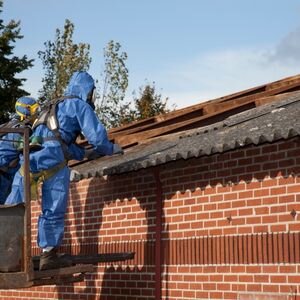
A seller once asked me to walk away because their attorney told them the house was “legally unsellable” due to asbestos in the attic insulation. The attorney was wrong, which meant the seller nearly left real money on the table over a disclosure issue that was fully manageable. The house sold.
Yes, you can legally sell a home with asbestos in Georgia. Federal law and Georgia state regulations do not require sellers to remove asbestos-containing materials before transferring a property. The EPA enforces regulations under the Asbestos Hazard Emergency Response Act (AHERA) and the Toxic Substances Control Act (TSCA), but these laws don’t mandate removal before a sale.
Georgia is a buyer-beware state, meaning sellers aren’t required to complete a formal disclosure form, but they must disclose any known material defects that could affect the property’s value or safety. Asbestos falls squarely into that category. Federal law doesn’t add an asbestos disclosure requirement on top of that. The EPA is direct about it: no federal rule makes a seller tell a buyer the home contains asbestos, and only state or local requirements can. The one federal disclosure that does apply to older homes is lead-based paint, which sellers of pre-1978 housing must disclose along with the EPA pamphlet. So the duty here is a Georgia duty, and silence about known asbestos isn’t a legal strategy.
Legal consequences extend beyond monetary penalties; sellers are vulnerable to lawsuits from buyers seeking damages for health issues, property devaluation, and remediation costs. The actual legal risk here is not the presence of asbestos itself, which is why disclosure is the only move that protects you.
What Are the Disclosure and Negotiation Rules for Asbestos in Georgia?
Georgia’s disclosure timing rule catches a lot of sellers off guard. Disclosure doesn’t need to be given in Georgia until after an offer is made on the home. You’re not legally required to lead with it in your listing or during showings. Most experienced buyers and their agents will ask directly, and lying in response is a completely different problem.
Georgia courts have carved out a passive concealment exception to buyer beware, so a seller who hides a known latent defect can still be sued after closing. Your listing agent carries a separate duty under Georgia Code 10-6A-5 to disclose adverse material facts about the property’s physical condition, and the statute names environmental contamination specifically. Written documentation is your best protection. Disclose what you know, in writing, and keep a copy.
On the negotiation side, asbestos doesn’t automatically mean a price crater. Buyers can request remediation before closing, request a price credit, or accept the property as-is with full knowledge of the ACM. Cash buyers and investors often don’t require removal at all; they’re pricing the condition into their offer. With a financed buyer, their lender may demand certain ACM be addressed before funding, and that’s where sales get complicated fast.
Georgia’s EPD (Environmental Protection Division) requires that any regulated abatement project covering 10 or more square feet or 10 or more linear feet of friable ACM be filed through the GEOS notification system at least 10 business days before work starts. If you’re pricing a remediation credit into negotiations, build that lead time into your timeline.
Repair, Encapsulate, or Remove: What Are Your Options Before Selling?
Encapsulation seals the ACM in place with a binding material, preventing fiber release without extraction. It’s generally the lower-cost path when the material is in stable condition. This Old House put encapsulation at $2 to $6 per square foot in its 2026 cost guide, against $5 to $20 per square foot for interior removal. The gap comes from skipping demolition and disposal. Full asbestos abatement, licensed removal, proper containment, and disposal at an approved facility, is more thorough but costs more. Asbestos removal in Atlanta averages $3,338, with most homeowners paying between $1,828 and $4,849, though whole-home remediation can push well past $10,000 depending on scope (square footage drives that number fast).
The third option, selling as-is with full disclosure, is the one sellers most often overlook. Cash buyers and investors buy properties with ACM regularly, accounting for it in the offer price. No permits pulled under your name, no contractor management, no scheduling delays waiting on the Georgia EPD 10-day notification window to expire. This is exactly the type of situation where we can step in and make a clean, straightforward offer without requiring you to remediate first (a condition most sellers don’t expect).
Which path makes the most financial sense depends on your equity position, timeline, and the type of buyer you’re targeting. If you’re looking for a faster, hassle-free sale, a company that buys homes in Augusta or nearby cities may be the right solution, especially if you want to sell your property as-is and avoid costly repairs or delays.
How Do You Sell a Georgia Home with Asbestos Fast and for Fair Value?
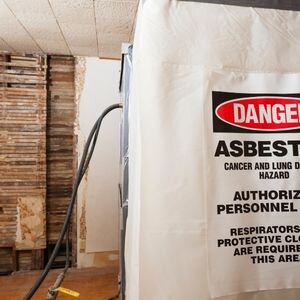
For years, I defaulted to suggesting sellers test and encapsulate before listing. What I’ve learned is that strategy wastes money for sellers who were never going to attract a financed buyer in the first place, leaving the remediation cost to come straight out of a shrinking margin with nothing to show for it.
Consider a job transfer with five weeks to be out of a 1960s bungalow. The ground floor still has its original 9×9 vinyl floor tiles, and the garage holds asbestos-cement roofing panels stored after a partial re-roof. A traditional listing is not happening in five weeks. Remediation is not happening in five weeks either. A cash buyer can make an offer after a single walkthrough and buy the property with the ACM in place. No contractors, no permits, no complications.
This scenario is more common than the real estate industry admits. Sellers with asbestos, tight timelines, or both spend weeks trying to make a traditional listing work before pivoting to a direct sale.
A pre-listing asbestos inspection runs between $250 and $850 in most Georgia markets. Get one if you’re unsure what you have. Knowledge about your property’s ACM condition puts you in a stronger negotiating position regardless of which sale path you choose.
Frequently Asked Questions
Do Realtors Have to Disclose Asbestos to Buyers?
Yes. Real estate agents in Georgia have a fiduciary duty to their clients and are legally prohibited from concealing material facts about a property. If an agent knows asbestos is present, they’re required to disclose it. Concealing it exposes both the agent and the seller to liability, and a real estate license can be suspended over it.
How Bad Is It to Buy a House with Asbestos?
It depends entirely on the condition of the ACM. Intact, non-friable asbestos that isn’t being disturbed poses a low day-to-day risk. Where it gets complicated is renovation: the moment you start remodeling, you need to test before you touch anything. Buyers who plan to live in the home as-is without major renovation often accept asbestos-containing materials without any issue, especially when the seller prices accordingly.
Can I Sue If My House Has Asbestos?
You may have legal grounds to pursue the seller if you can show they knew about asbestos and deliberately withheld that information. Georgia courts have ruled against sellers who failed to disclose known material defects. Your options include seeking remediation costs, a price adjustment, or, in cases of clear fraud, punitive damages. An attorney with Georgia real estate experience can tell you whether your specific situation has merit.
Can You Live in a House with Asbestos Being Removed?
Living in the home during active asbestos abatement is not a good idea. Licensed Georgia contractors are required to establish containment zones, use HEPA filtration systems, and seal off affected areas to prevent fiber migration. Most contractors and the EPA recommend that occupants stay elsewhere for the duration of the project and until post-clearance air sampling confirms safe fiber levels. The timeline for most single-room or limited abatement jobs is a few days to a week.
Do you need to sell a house with asbestos? Skip expensive asbestos removal, avoid lengthy repairs, and sell your property as-is. Prime Cash Home Buyers specializes in buying homes with asbestos and provides fair cash offers with no hidden fees. We handle the details, so you can enjoy a simple, stress-free selling experience. Ready to sell or have questions? Contact us at (706) 670-6543 for a no-obligation cash offer. Get started today!
Helpful Georgia Blog Articles
- Sell Your House During A Divorce In Georgia
- Maximize Your Profit: How To Sell A House As-is In Georgia
- Selling Your Home In Foreclosure In Georgia
- How to Sell a House in Probate in Georgia
- Who Pays the HOA Fees at Closing in Georgia
- How to Sell a Condemned House in Georgia
- How to Sell an Apartment in Georgia
- Can Sellers Back Out of Real Estate Contracts in Georgia
- How to Sell Your Fire-Damaged House in Georgia
- Selling a House With Foundation Problems in Georgia
- Can You Sell a House With a Lien in Georgia
- Capital Gains Tax After Selling a House in Georgia
- How to Sell a House Without a Realtor in Georgia
- Can You Sell a House with Asbestos in Georgia
- Selling a House That Needs Repairs in Georgia