
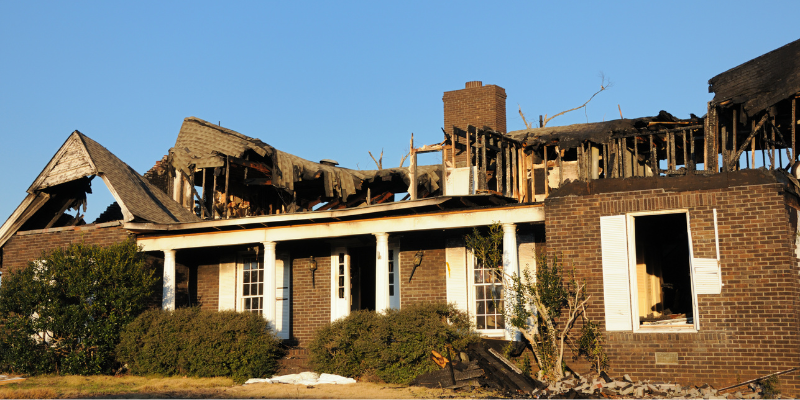
A home with fire damage can be a great opportunity. Many homeowners discover fresh beginnings after assessing their options. A home with fire damage may have issues with smoke, structural integrity, or water used to extinguish the fire. In all of these cases, there are paths to sell the home quickly for cash. Based on experience with fire-damaged homes, here are some strategies. Knowing your options can help you stay in control and stress-free as you work through the issues.
How to Sell Fire-damaged Property in Georgia: Complete Guide
Generally speaking, selling a fire-damaged house in Georgia can present challenges, both logical and emotional. On top of everything else, homeowners face the chaos of insurance adjusters, expensive repair estimates from contractors, and living in temporary housing while making important decisions that must be made quickly and that come with little to no guidance.
Georgia’s median home price is $373,800, according to Redfin’s monthly housing market data from November 2025. This is a decrease of about 7.3% since November of last year. But fire damage changes everything. Your property’s value depends on the extent of damage, location, and whether you’re willing to invest in repairs before selling. In many cases, the final offer is more closely tied to repair risk than to market averages.
The most important thing is knowing your options. The choices you have include: putting the house on the market with an agent after making a number of repairs, selling the house ‘as-is’ to a cash buyer, or selling directly to fire-damage investors. Each of these options has its pros and cons regarding the final sales price, the deadline, and the cost. The right choice also depends on how much you have to spend, how much time you have, and how much time you can devote to the house.
Prime Cash Home Buyers provides a fast cash offer, an as-is way to sell your fire-damaged Georgia home, helping you avoid repairs, reduce stress, and close quickly with a clear and certain timeline.
Insurance Claims Process for Fire-damaged Properties Before Sale
Your options and schedule for selling can be impacted by your insurance claim. HVAC issues in homes, lightning strikes in the northern regions, and kitchen grease fires cause more than 8,000 residential fires in Georgia every year. Because of this, insurance companies in Georgia are familiar with fire claims, though the process is still long and complicated. Depending on the damage and the insurance company workload, it can take a long time.
Fire damage is usually covered by homeowner’s insurance under dwelling coverage for structural damage, but claims can take a while to fully process. Adjusters inspect the property to determine what the coverage includes and, afterward, decide whether the insurance will provide the actual cash value of the settlement or the replacement cost. Homeowners consider selling options, while some cash buyers may purchase with the claim still open; a majority prefer to wait until it is resolved to avoid concerns about title or property value.
Large-scale disasters like Hurricane Helene have also put pressure on Georgia’s insurance market, leading to rising premiums and longer processing times. If you are navigating a claim, it is important to document everything thoroughly, including photos, correspondence, and living expenses, since strong records can support both your insurance negotiation and any potential sale.
Understanding Fire Damage Assessment and Property Valuation in Georgia

An assessment of fire damage must consider more than what is seen in the aftermath of a fire. The exterior of a structure may suffer from do-nothing damage, appearing wrapped in fireproofing, as this type of damage can cause smoke, requiring the replacement of an entire system under the surface. Even if the fire damage is minimal, water used to douse the fire can leak and subsequently damage building amenities and structures.
Typically, a professional inspection can provide a review of many of the home’s systems and structures. Load-bearing walls and foundation stability; electrical wiring; plumbing (usually the most damaged from either heat or water pressure); HVAC contamination from smoke, soot, and/or water; roofing conditions and leaks; and the general condition of the home from the smoke and soot.
Fire is one of the most costly types of property damage, accounting for over 1 in 4 insurance claims. These claims are often extremely expensive, and even liability-related fire claims, while less common, can still result in high costs for homeowners and insurers. This often attracts cash home buyers in Georgia.
For fire-damaged homes, assessors analyze the cost of restoration, comparing it to the pre-fire valuation of the home and the land component. When it comes to cash buyers, there is typically a quicker sale, as they tend to assess the value of the post-restoration home and deduct the cost of restoration and a desired profit. Restorations that buyers use also tend to differ from restoration/appraisal methods.
Structural Safety Inspections Required for Fire-damaged Houses
Georgia building codes require specific inspections before fire-damaged properties can be occupied or sold with traditional financing. State law also mandates working smoke alarms in all residential units, while local jurisdictions, such as Fulton County, may impose additional rules, including outdoor burning bans during droughts, to maintain safety standards after fire events. These measures help ensure long-term habitability.
Structural inspections are a key part of the process. Licensed engineers assess foundations, load-bearing elements, and overall stability before granting clearance. This is especially important in areas around Atlanta and Augusta, where clay-heavy soils and firefighting water can cause hidden foundation shifting. Minor damage can sometimes mask deeper structural issues.
Electrical, plumbing, and HVAC systems must also be inspected and often repaired or replaced. Fire can damage wiring insulation in ways that aren’t visible but still hazardous. Plumbing may be affected by heat or firefighting pressure, and HVAC systems are often heavily contaminated by smoke and soot, making full replacement common in Georgia’s humid climate. Proper system restoration is critical for safe reoccupation.
Professional Cleanup and Restoration Services Before Property Sale
Professional restoration can significantly impact your sale price, but it’s not always worth the investment. In some cases, homeowners spend about $50,000 on a full restoration only to see their home sell for just $10,000 more than it would have sold for as-is. The return depends heavily on the property, the local market, and the severity of the damage.
Fire restoration usually includes a series of steps such as board-up, waterproofing, and tarping, followed by water removal from firefighting efforts and soot and smoke removal from surfaces. Then, odor elimination using special equipment (e.g., ozone or thermal fogging) follows. After the restoration, part of the structure may need to be completely repaired and rebuilt. Finally, the site is reinstated, cleaned, and sanitized to make the structure safe and habitable.
Fire restoration services from a chosen company are usually covered by fire insurance. Almost every homeowner’s policy includes some sort of fire insurance because fire restoration services tend to be more expensive than wind or hail damage restoration. Liability protection, support for structural repair and replacement, and coverage for additional living costs incurred while away from home are also included in fire insurance.
The restoration timeline is usually 3–6 months for moderate damage and can take much longer for severe structural loss. During this time, homeowners may pay for temporary housing, storage, and other out-of-pocket costs, which can reduce the overall insurance settlement if not managed carefully.
Legal Requirements for Selling Fire-damaged Homes in Georgia

Georgia is considered a buyer-beware state, meaning sellers are not automatically required under state law to provide extensive disclosures about a property. However, federal disclosure rules still apply, along with any local or municipal requirements that may be in place.
That said, “buyer beware” does not allow a seller to conceal fire damage. Georgia law still requires disclosure of known material defects, and fire damage is always considered material because it can impact both safety and value. Sellers should be prepared to provide information about the fire, repairs, and any remaining issues that could affect the property. The same principle applies when you sell a house with asbestos, as known asbestos-containing materials should also be disclosed to prospective buyers.
In Georgia, the law often requires that fire damage repairs be performed by properly licensed professionals. If a property is sold as-is, a buyer is not obligated to obtain permits for repairs, though any fire-damage repairs must have permits and inspections before the sale is finalized to avoid complications.
There is a variation in the law and rules depending on the municipality as well. For instance, in historic districts like Savannah, there are stricter guidelines, whereas in Atlanta, regulations are less strict. Insurance claims, building liens by contractors and/or trades, and/or the lack of permits can cause title issues. Thus, the hiring of a real estate lawyer is recommended. This can prevent complications and delays when a property involved in the sale is in the process of sale.
If you’re looking to sell, we can provide a fast cash offer. Simply contact us to get started. Even in a buyer-beware state like Georgia, we buy properties as-is, including those with fire damage or repair needs, making the process straightforward and hassle-free.
Disclosure Obligations for Selling Fire-damaged Real Estate in Georgia
Georgia follows the caveat emptor principle, but that doesn’t absolve sellers from disclosing known material defects. Since fire damage is one of those, adding an example of fire damage loss in value and safety is helpful. Transparency between the buyer and the seller will help avoid future quarrels and preserve their trust in each other.
The Seller’s Property Disclosure Statement is, in technical terms, voluntary, but in practice, it will be required. Sellers will need to follow and ensure that, whether by completing the form or otherwise, all defects/material issues are conveyed to the buyer. If that is not done, sellers will be subjected to necessary legal action.
A full disclosure would include the fire’s date and cause, structural and system damage, insurance claims, and any assessments and informative repairs, including permits. Under the repairs, it would state any persistent issues, such as smoke or water damage, as well as inspections/assessments.
It would be in your best interest to complete the Georgia Association of Realtors’ Seller’s Property Disclosure Statement, as it is better to be transparent, and if claims of misrepresentation arise, you would be offered some protection. Do not seek to be transparent concerning fire damage, as potential buyers would discover it during their inspections, and be careful, as misrepresentation claims are very likely.
Repair Vs. Sell As-is: Financial Analysis for Fire-damaged Properties
This decision depends on your financial situation, timeline, and the extent of damage. I’ve seen homeowners make both choices successfully, but the math needs to work. In many cases, short-term cash flow needs also heavily influence the decision. It ultimately comes down to which option better supports your financial goals.
Let’s look at a real example. A ranch house in Marietta with moderate fire damage might need $40,000 in repairs to sell for $280,000 on the traditional market. Selling as-is to a cash buyer might bring $200,000 with a 2-week closing. The difference often reflects time, effort, and risk tolerance. This helps illustrate the real trade-offs involved.
The as-is sale would give you $200,000 with no additional time and expense. The repair-and-sell approach may bring you $240,000 after selling, but would require managing time-consuming renovations, plus a 6-8 month timeframe, carrying costs, and real estate commissions. The essential trade-off between the two is liquidity vs. higher returns. The timeframe is often a critical point for many owners.
Evaluate and keep the following factors in mind: the amount of the settlement you got from insurance, how much you estimate repairs to be with a 20% cushion, carrying costs of the repairs, the cost of temporary housing, real estate agent commissions and costs to close, how much time and stress you think will be involved, conditions of the local market, buyer demand and other variables. Each factor is one of many that will significantly alter the result that you get.
Marketing Strategies for Fire-damaged House Sales
If you list a fire-damaged property on the traditional market, a strong marketing strategy is essential. Most buyers tend to skip over damaged listings, so your presentation must quickly shift attention from the damage to the property’s potential. Clarity and honesty build trust quickly. A focused strategy can significantly improve serious buyer interest.
The focus of professional renovation photography should be transparency and possibility. There should be no attempt to hide damage. Show images of the current state of the home as well as images of what the home could be. Buyers should understand the full scope of the renovation. Use before and after photos of previous renovations to illustrate the potential of the home and the upside of buying the property.
Descriptions in the listing that highlight the beds, baths, location, lot size, and layout will improve your listing. Be honest about the fire damage, appreciate it as a builder’s opportunity that will appreciate in value. If possible, provide a rough estimate of the time and cost to repair. This will allow buyers to see the trade-off between the time to invest in repairs and the return on the trade. Clear information leads to more confident decision-making.
Pricing must reflect condition and market reality, typically well below comparable undamaged homes to attract investors and cash buyers. Target specific audiences like contractors, investors, and customization-focused homebuyers, since each group evaluates risk and reward differently and can respond more positively when the opportunity is clearly framed. Correct pricing ensures the listing reaches the right buyers faster. You can also consider working with a company that buys houses in Atlanta and other cities in Georgia, especially if you want a faster, as-is sale without going through the traditional listing process.
Tax Implications of Selling Fire-damaged Real Estate in Georgia

Fire damage creates complex tax situations because insurance settlements, casualty loss deductions, and capital gains rules all interact and can significantly affect your financial outcome. These rules are often overlooked until filing time. Understanding how each piece works together is important before you settle with an insurer or decide to repair or sell the property. Small decisions early on can change your tax result later.
Reimbursement from an insurance settlement for a loss is usually not taxed. Yet, if an insurance payout is higher than the property’s adjusted basis, this situation is more likely for long held/property that has appreciated in value, and you could incur a taxable gain. This is likely due to the settlement’s structure.
If your damage is not fully covered by insurance, you could be eligible for a casualty loss deduction. For the year 2024, losses must be greater than 10% of your adjusted gross income, with an additional $100 per incident, to be eligible as a deductible loss. Also, when you dispose of the property, the sale can result in a gain or a loss depending on your adjusted basis. You may also be eligible for the primary residence exclusion ($250,000 for single filers, $500,000 for married filers) in this instance. Given that various combinations of landing on a repair, insurance, and sale decision can impact the tax you pay, careful planning is vital for this scenario.
Title Issues and Fire-damaged Property Transactions in Georgia
Fire damage will further complicate an owner’s ability to sell a property due to various title issues. One of the more common issues is the complications caused by insurance settlements, which are sometimes correlated to liens. If an advance payment is involved or if your mortgagor participated in the claim, they will have, or will have to honor, a vested interest, which must be resolved before the property can be sold.
Another common issue is contractor liens. These are common, especially when there is a provision for repair work to have already commenced after the fire. These contractors can, and often will, secure a lien on the property for labor, materials, or change orders performed and will have to be cleared, released, or legally bonded before the property can be sold.
Building code and permitting issues can also cloud the title. If repairs were completed without proper permits or inspections, local governments may impose violations or unpaid fee liens. Title companies often require proof that all work was done in accordance with code and that any outstanding municipal requirements have been satisfied.
Mortgage and homeowner association complications may further delay a sale. If fire damage has reduced the property’s value below the remaining loan balance, lender approval may be needed for a short sale. At the same time, unpaid HOA dues or violations can create additional encumbrances. Title insurers typically request detailed documentation to confirm the property is free of all liens and compliance issues, making early resolution essential.
Georgia Real Estate Attorney Services for Fire-damaged Property Sales
Real estate attorneys provide critical support when selling fire-damaged property, especially under Georgia’s disclosure laws. They ensure your disclosure statements are complete and legally compliant, helping you avoid potential lawsuits for misrepresentation or fraud if defects are later discovered. Proper disclosure reduces the risk of buyers rescinding the contract or seeking financial damages after closing.
They also play a key role in contract negotiation and transaction structure. Fire-damaged properties often involve detailed terms about condition, repairs, and contingencies, and attorneys help ensure these provisions protect your interests while keeping the transactions viable. In addition, they assist with due diligence issues, including evaluating inspection findings and responding to buyer repair requests or concerns.
Attorneys also help resolve title issues, insurance matters, and closing requirements. This can include clearing liens, addressing permit issues, reviewing insurance settlements, and coordinating necessary documentation, such as releases and certifications. Because fire-damaged property sales involve complex legal and financial risks, working with a Georgia real estate attorney with relevant experience is especially important.
Selling your fire-damaged house in Georgia doesn’t have to be overwhelming. Whether you choose to repair and list traditionally or sell as-is to a cash buyer, understanding your options helps you make the right decision for your situation. Many homeowners successfully navigate both paths. The key is getting accurate repair cost information, understanding your insurance settlement, and knowing what cash buyers are willing to pay for your property in its current condition.
Frequently Asked Questions
Can you sell a house with fire damage in Georgia?
Yes, you can absolutely sell a house with fire damage in Georgia. You have several options, including selling as-is to cash buyers, making repairs first, or working with investors who specialize in fire-damaged properties. The key is understanding your disclosure obligations and pricing the property appropriately for its condition.
What makes a house unable to sell in Georgia?
Houses become difficult to sell if there are title issues, extensive structural damage that makes the property unsafe, or if sellers try to hide known defects. Fire damage itself doesn’t make a house unsellable, but inadequate disclosure, unrealistic pricing, or unresolved insurance and permit issues can create problems that prevent sales.
What devalues a house the most in Georgia?
Fire damage can significantly reduce a home’s value, depending on its severity and the quality of repairs. Other factors include foundation issues (especially in Georgia’s clay soils), outdated electrical systems, and permit violations. Location, such as proximity to industrial areas or flood zones, also strongly affects value.
If you want to explore your options, Prime Cash Home Buyers offers no-obligation consultations and quick cash offers. They understand fire damage and can work with your timeline, whether you need to close in two weeks or two months. Reach out to us at (706) 670-6543. The key is taking action. Fire-damaged properties do not improve over time, and delays often lead to additional complications and costs. You have already faced the hardest part, the fire. Now it is time to move toward a fresh start.
Helpful Georgia Blog Articles
- Sell Your House During A Divorce In Georgia
- Maximize Your Profit: How To Sell A House As-is In Georgia
- Selling Your Home In Foreclosure In Georgia
- How to Sell a House in Probate in Georgia
- Who Pays the HOA Fees at Closing in Georgia
- How to Sell a Condemned House in Georgia
- How to Sell an Apartment in Georgia
- Can Sellers Back Out of Real Estate Contracts in Georgia
- How to Sell Your Fire-Damaged House in Georgia
- Selling a House With Foundation Problems in Georgia
- Can You Sell a House With a Lien in Georgia
- Capital Gains Tax After Selling a House in Georgia
- How to Sell a House Without a Realtor in Georgia
- Can You Sell a House with Asbestos in Georgia
- Selling a House That Needs Repairs in Georgia
- Can a Seller Refuse Repairs After a Home Inspection?