

Picture this: You’ve got an accepted offer on your house, and suddenly you’re having second thoughts. Maybe another buyer just offered you 20% more, or you’ve decided not to move after all. Can you just walk away? The short answer is: it depends on what’s written in your contract and how you go about it. Buying houses in Georgia for over a decade, plenty of sellers try to back out of the sale. Some do it legally, others end up in court. Yes, a seller can back out, but only under certain circumstances stated in their contract. The keyword here is “circumstances.” You can’t just change your mind and expect to walk away clean.
Understanding Seller Contract Termination Laws in Georgia Real Estate Transactions
Once a seller in Georgia accepts an offer on a home and the buyer fulfills their obligations, the agreement becomes legally binding. Georgia customarily applies the principles of contract law, which indicate that upon the formation and acceptance of a real estate contract, both parties are obligated to fulfill the responsibilities imposed by the contract. Once this occurs, the seller loses the ability to back out of the contract without incurring the ramifications of a breach.
Breaching a signed purchase agreement by a seller is expensive. Sellers need to be aware that if they try to back out, they could be held liable to the buyer for their damages and even be ordered to pay the buyer’s legal fees. Because of this, sellers need to be aware of the terms and provisions of the agreement before they sign, and to act expeditiously if they intend to withdraw, as the longer they wait, the greater their legal and financial exposure.
Given the high demand for property transactions in Georgia, real estate contracts are taken quite seriously by the courts. Recently, in Georgia, the average sales price was over $400,000, and the median sales price hit about $360,000. It is clear that prices are high and that disputes are taken seriously. If a seller without a legal contractual reason stops the sale, the buyer can sue the seller for breach of contract. The court may hold the seller liable to the buyer for any damages resulting from the seller’s wrongful failure to close.
Contact us today to receive a fast, hassle-free cash offer on your Georgia home. Once your offer is accepted and terms are met, the agreement is legally binding, so you can move forward with confidence and avoid the uncertainty of traditional listings.
Georgia Real Estate Contract Seller Withdrawal Rights and Legal Obligations
Let me be straight with you about seller rights in Georgia. Unlike some states that give sellers cooling-off periods, Georgia doesn’t automatically provide sellers with a “get out of jail free” card. If the contract is a standard GAR (GA Association of Realtors) contract, there is not going to be a Seller’s Right to Cancel provision unless you specifically negotiated it and included it in the Special Stipulations section.
Most sellers don’t realize this until it’s too late. Doing this would be quite rare, as a buyer would be unlikely to sign, as they would have no recourse against you if you back out. Smart buyers and their attorneys know better than to agree to seller escape clauses without getting something significant in return.
The legal obligations for sellers in Georgia are pretty straightforward once you sign: Complete the sale as agreed, provide a clear title, make agreed-upon repairs, allow inspections as specified, and close on the scheduled date. Failure to meet these obligations can expose the seller to contractual remedies such as damages or specific performance.
As such, financial agreement penalties for court compliance will occur under Georgia law. By Georgia law, a real estate agreement must be completed unless a seller contract is properly terminated by a qualified real estate attorney, not by Georgia law. Enforcement depends on the specific contract terms and applicable Georgia contract law, and remedies are typically pursued through civil courts.
Legal Grounds for Seller Contract Cancellation in Georgia Property Sales
Sellers don’t have many easy ways to cancel a real estate contract, but there are legitimate legal grounds. These include being within an attorney review period (if expressly included in the contract), the buyer failing to follow the contract terms, or the buyer requesting repairs that the seller refuses to complete. In Georgia, there is no automatic five-day attorney review period unless it is specifically written into the agreement. The issue of a seller refusing repairs after the inspection can become important when determining whether the buyer or seller has rights under the specific terms of the contract.
The strongest reason a seller may have for terminating a contract is usually buyer default. When a buyer fails to satisfy rudimentary contract provisions, such as obtaining financing, making an earnest money deposit by the deadline, or complying with expiration dates for buyer inspections (or otherwise violating the contract), the seller may have grounds to terminate the contract. Nevertheless, the contract is not terminated automatically, and the buyer must actually be in violation.
A written notice of termination must be delivered to officially terminate the agreement. This step provides a record for future reference that termination is in response to the other party’s default. This naturally discourages future disagreements because the party legally bound to communicate the termination provides evidence that the termination corresponds to a real breach. This is the proper way to communicate the termination of the contract.
Georgia Property Sale Contract Contingencies That Allow Seller Withdrawal

Contingencies benefit buyers but also afford essential protections to sellers. They can be included in contracts to address challenges that affect the transaction, such as title issues, inspections, funding, etc. Sellers with experience, for instance, negotiate contingencies so they can legitimately have the option to leave or even change the transaction details when they feel it is necessary.
In Georgia, common seller contingencies include selling the seller’s current home, securing a suitable replacement property, inspection-related contingencies, and financing contingencies tied to the seller’s next purchase. These protections become even more important in markets where demand shifts quickly or where houses are harder to come by. Many Georgia real estate contracts address these situations by including provisions that protect a seller’s ability to move on to the next step.
That said, seller’s contingencies must comply with Georgia’s limits to be enforceable. This means that if a seller’s contingency is found to be vague or unreasonable, that contingency is likely to be found to be legally unenforceable. For these reasons, it is important for a Georgia real estate seller to have an attorney review the contingencies in their real estate contract before signing, to ensure they are enforceable. Good drafting further eliminates prolonged disputes over real estate closing issues.
Prime Cash Home Buyers offers a cash purchase option that can streamline the selling process by reducing or eliminating common contingencies such as financing, inspections, and replacement-home requirements, allowing for a faster and more certain closing while still ensuring all contractual terms comply with Georgia real estate law.
Title Issues and Seller Contract Termination Options in Georgia
Although title problems can be a legitimate reason for a real estate seller to cancel a contract, this can only be the case if they are genuine, unsolvable issues. These are usually included as terms in the contract and may, for example, cover title defects or other legal barriers/investigatory contingencies. It is important to know which conditions can be legally asserted before relying on them when canceling a contract.
Commonly encountered title issues that justify a cancellation/termination include boundary disputes, litigation involving easements, probate, certain liens that haven’t been provided to settlement, divorce matters, and/or issues involving the title resulting from the probate process. These matters generally involve court proceedings, cooperation from the lien holder or legal heir, or a neighboring title issue, and tend to complicate the sale.
However, sellers are generally expected to make a good-faith effort to resolve title issues before using them as grounds for cancellation. Courts typically will not accept manufactured or avoidable problems as justification for backing out of a contract. The key distinction is whether the issue is truly beyond the seller’s control or simply inconvenient to address.
Georgia Property Disclosure Requirements and Seller Contract Termination
Georgia recognizes ‘buyer beware’ principles in real estate sale. When this premise applies, a buyer is generally responsible for reviewing the property’s condition before purchase. If a buyer is aggrieved by a condition of the property that is a defect reasonably discoverable through inspection, the buyer usually cannot successfully pursue a claim for fraudulent misrepresentation against the seller.
Caveat emptor does not justify deception by sellers by hiding or altering the truth about property problems. Georgia sellers must be honest under state law and often have an affirmative duty to disclose defects in the property that are not readily apparent. An omission that involves the active concealment of or an untruth about the property may expose sellers to liability for such an omission, depending on the facts.
There may be state law, contract, or broker code-specific, affirmative duties of disclosure that sellers must follow. Everything from a disclosed, massive structural issue to a broken water heater to roof and foundation issues that impact the property’s safety and significantly detract from its overall value may be included. While the totality of situations may vary, an unintentional misrepresentation of facts about a property will most likely be covered within the disclosure.
If a buyer discovers a serious issue after signing the contract that was truly unknown and not reasonably discoverable during inspection, there may be options to address it. In some cases, this could justify renegotiating the terms or even canceling the contract, depending on contingencies and timing.
Georgia Real Estate Closing Process and Seller Cancellation Deadlines
Timing matters enormously in Georgia real estate contracts. If the buyer can’t close by the closing date and the contract expires, then you should be alright. But you can’t just wait around hoping the buyer defaults. This is why sellers, including those working with Georgia cash buyers, often track deadlines closely and document every missed obligation.
Once a purchase contract is signed, earnest money checks are usually payable within three days. An untimely payment may entitle you to exercise the contract’s unilateral termination rights. In general, timeliness is critical to enforcing the contract.
In Georgia, earnest money is due from one to three working days after a contract becomes binding. The contract spells out the exact time. If payment is delayed, the buyer is in breach, and the seller may cancel the contract. To minimize disagreements, the contract terms should be examined carefully.
Georgia’s current market shows homes spending about 60 days on the market on average, with 67 days in some areas, up 7 years over the year. This means buyers are being more careful, but also that timing deadlines are more critical than ever. Sellers who price and respond strategically tend to avoid costly delays.
Breach of Contract Consequences for Sellers in Georgia Real Estate Transactions
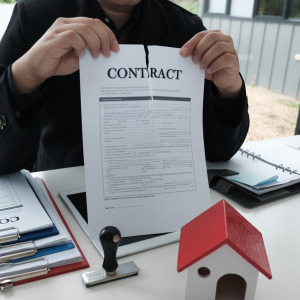
Let’s talk about what happens when sellers try to back out without legal grounds. An example would be if a seller of a home decided they no longer wanted to sell after signing a contract stating that they would. This breach is obviously serious and has the potential to cause significant harm to the affected party.
Consequences can be very serious. Where an injured buyer sustains financial losses as a result of a breach (e.g., increased housing expenses or even cost differences to buy a similar property elsewhere), the buyer may be awarded monetary damages. Courts can order sellers to be legally compelled to fulfill the sale as originally agreed. Additional legal costs may also be sustained where a buyer incurs attorney’s fees. Depending on the particulars of the case, a buyer may also incur lost-opportunity costs and punitive damages.
The consequences of breach of contract are especially severe for the innocent party in real estate contracts in Georgia. Courts tend to be strict in enforcing these contracts in real estate markets with low housing inventory. etc. For these reasons, a seller who attempts to abandon a contract without an enforceable legal reason is setting himself up for significant financial and legal consequences.
Financial Penalties and Damages for Georgia Seller Contract Breaches
The financial fallout for sellers breaching contracts in Georgia can be severe. A material breach is the result of one receiving something that is, in drastic deviation, disparate from what is indicated in the contract. In these types of cases, damages tend to be heavily weighted in the non-breaching party’s favor, as they can easily demonstrate that they have suffered a loss.
Various kinds of damages can be recovered by buyers from the situation at hand. They can include actual damages for paying a higher price for a replacement property; consequential damages, such as housing and storing costs that accumulated because of the breach; and lost income the buyer would have had if the property had been an income-producing investment. If the contract allows, attorney’s fees can be recovered, and as a general rule, courts determine if the damages were reasonably foreseeable at the time the contract was entered.
Many contracts also include liquidated damages clauses, which set a specific amount to be paid if a breach occurs. In Georgia, these provisions are generally enforceable when properly drafted and when they reflect a reasonable estimate of potential harm rather than a punishment. However, courts may still refuse to enforce them if the amount is excessive or considered punitive.
Earnest Money Disputes When Georgia Sellers Back Out of Contracts
Earnest money disputes are increasingly common in Georgia. Earnest money is not legally required in Georgia real estate transactions, but is commonly used to demonstrate a buyer’s serious intent. When included, the terms governing the deposit must be explicitly outlined in the purchase and sale agreement.
In Georgia’s current market, 1%-3% of the purchase price is standard in most Georgia real estate transactions. In competitive markets such as Atlanta, Savannah, and parts of North Fulton, buyers may offer more to stand out from the crowd. On a $360,000 home, that’s $3,600 to $10,800 at stake.
Georgia law requires that earnest money held by real estate brokers be deposited within a specific timeframe and kept in trust accounts. The Georgia Real Estate Commission has strict rules about this. Brokers who mishandle escrow funds can face serious penalties, including license suspension or revocation.
If there’s a dispute about who should get the earnest money, the holder can’t just decide on their own in most cases. They have to either obtain written agreement from both parties, interplead the funds with the court (basically letting a judge decide), or follow the dispute-resolution process outlined in your contract.
Buyer Remedy Options When Sellers Breach Georgia Real Estate Contracts
When a seller in Georgia breaches a real estate contract, the buyer still has legal remedies designed to compensate for losses and, when possible, place them in the position they would have been in if the contract had been fulfilled. These remedies are governed by contract law principles that aim to ensure fairness and prevent unjust enrichment of the breaching party. The appropriate remedy depends on the circumstances of the breach and the financial harm suffered.
By far, the most common remedy is monetary damages, with the losses from the breach actually recoverable by the buyer. This usually includes the costs and related expenses involved in the breach, such as inspections and appraisals, as well as the costs the buyer paid to close the sale, rather than the cost to the buyer to close on a similar transaction. These damages are intended to restore the buyer’s economic standing. They are not meant as a punishment to the seller.
A buyer may request that a seller fulfill a contract as originally agreed when the buyer believes the property is unique. If the buyer believes the property is not unique and therefore cannot request specific performance, the buyer may instead request termination of the contract with restitution. The contract termination with a restitution clause allows the buyer’s earnest money to be returned and reimburses the buyer for reasonable costs and/or expenses incurred in the transaction. This is used as a remedy when practical completion of the transaction is no longer fiscally or practically feasible.
Court-ordered Specific Performance in Georgia Property Sale Disputes

Specific performance is a legal remedy available in Georgia real estate contract disputes when monetary damages are insufficient to compensate the injured party. In these cases, a court may require the breaching party, often the seller, to complete the sale under the original terms of the contract.
Georgia courts recognize that real estate is generally considered unique, meaning that a particular property cannot be easily replaced with a comparable alternative. Because of this principle, buyers may seek specific performance when a seller refuses to close after entering into a binding agreement.
If granted, specific performance requires the seller to proceed with the transaction as agreed in the contract. This means transferring the property to the buyer at the agreed-upon price, subject to the court’s order and the terms of the agreement. However, the availability of additional remedies such as damages or attorney’s fees depends on the contract language and the specific circumstances of the case.
Because Georgia courts enforce real estate contracts according to equitable principles, sellers who attempt to withdraw from a valid agreement may face court orders requiring completion of the sale rather than simple termination of the contract. These principles also apply in the Augusta, Georgia market, including transactions involving cash house buyers in Augusta and surrounding Georgia cities, where binding real estate agreements remain enforceable under the same legal standards.
Listing Agreement Conflicts and Seller Contract Withdrawal in Georgia
Here’s something that trips up many sellers: conflicts between their listing agreement and their sales contract. These are two separate legal documents with different purposes. A listing agreement is your contract with your real estate agent, while a sales contract is your agreement with the buyer. They are not interchangeable and are governed by different rules.
Your listing agreement sets the terms of your relationship with your broker, including marketing duties and commission. Your sales contract, on the other hand, governs the actual sale of the property, such as price, contingencies, and closing terms. Canceling your listing agreement does not cancel or undo a signed sales contract with a buyer.
This distinction matters because once a sales contract is signed, it is legally binding. Unless there is a valid contingency or mutual agreement to terminate, both parties are expected to follow through. Walking away from a sales contract can expose a seller to legal and financial consequences that are far more serious than ending a listing agreement.
The Brokerage Relationships in Real Estate Transactions Act (BRRETA) requires a written brokerage agreement between a broker and a client to establish the agency relationship. While breaking a listing agreement may lead to commission issues or fees, breaking a sales contract can result in breach-of-contract liability, which is typically much more costly.
Mediation and Arbitration Options for Georgia Real Estate Contract Disputes
Many Georgia real estate contracts include alternative dispute resolution clauses that require parties to attempt negotiation, mediation, or arbitration before going to court. These provisions are intended to reduce court congestion and encourage faster, earlier resolution of disputes. They also help clarify each party’s rights and responsibilities in the event of a conflict.
Contracts may specifically require mediation or arbitration in the event of a dispute. Mediation involves a neutral third party helping both sides reach a voluntary agreement, while arbitration functions more like a private trial with a binding decision made by the arbitrator. These methods are often enforced by the contract itself, making them mandatory steps before litigation can proceed.
In addition, escrow holders may file an interpleader action when there is uncertainty about who is entitled to the funds, allowing the court to resolve the issue. In an interpleader, the holder of disputed funds deposits the money with the court and asks the judge to determine the rightful claimant, removing themselves from the conflict. This process is commonly used by real estate brokers in earnest money disputes and helps ensure that conflicts are resolved in a structured, impartial way.
Georgia Real Estate Attorney Consultation for Seller Contract Problems
If you are considering backing out of a real estate contract, your first step should be consulting a qualified Georgia real estate attorney. An attorney can explain your legal rights, determine whether you have valid grounds for termination, and help you avoid unintentionally breaching the agreement. This guidance helps reduce the risk of disputes, financial loss, or litigation.
A real estate attorney will also review your contract in detail, outline the potential consequences of cancellation, and advise you on alternatives such as negotiation or amendment. This allows buyers and sellers to make informed, strategic decisions rather than acting on uncertainty or assumptions. It can also help preserve professional relationships and reduce the likelihood of escrow disputes or other transaction delays.
Attempting to cancel a contract without legal advice can lead to avoidable complications, even if a lawsuit is ultimately unsuccessful. Market changes or a desire for a higher price are not legal grounds to break a binding agreement, so proper legal counsel is essential to ensure compliance with contract law and to protect you from liability.
Frequently Asked Questions
How long can a home seller back out of a contract in Georgia?
There’s no automatic cooling-off period for sellers in Georgia real estate contracts. You can only back out if you have specific contingencies written into your contract or if the buyer breaches their obligations. The timing depends entirely on what’s negotiated in your specific agreement.
What happens if a seller pulls out of a real estate contract?
If you pull out without legal grounds, you could face serious consequences, including paying monetary damages to the buyer, being forced to complete the sale through court-ordered specific performance, and covering the buyer’s attorney fees. The buyer may also sue for additional costs they incurred as a result of your breach.
Can a seller back out of a real estate contract in Georgia?
Yes, but only under specific circumstances, such as buyer default, unresolvable title issues, or contingencies you negotiated into the contract. Simply changing your mind or getting a better offer isn’t legally sufficient grounds for cancellation without facing potential penalties.
How long do you have to back out of a contract in Georgia?
The timeframe depends entirely on the contingencies in your specific contract. Unlike some states, Georgia doesn’t provide sellers with a standard attorney review period unless you specifically negotiate for one. Most contingencies have deadlines ranging from a few days to several weeks after contract signing.
If you’re facing a complex contract situation and need to explore your options, don’t go it alone. Prime Cash Home Buyers is here to help. Whether you’re looking to understand your legal position, considering alternative selling solutions, or interested in a fast, hassle-free cash offer, getting professional guidance is crucial. We can walk you through your choices and, if it’s the right fit, present a fair cash offer so you can move forward with confidence. If you want to talk through your options, we’re here- no pressure, no obligation. Contact us at (706) 670-6543.
Helpful Georgia Blog Articles
- Sell Your House During A Divorce In Georgia
- Maximize Your Profit: How To Sell A House As-is In Georgia
- Selling Your Home In Foreclosure In Georgia
- How to Sell a House in Probate in Georgia
- Who Pays the HOA Fees at Closing in Georgia
- How to Sell a Condemned House in Georgia
- How to Sell an Apartment in Georgia
- Can Sellers Back Out of Real Estate Contracts in Georgia
- How to Sell Your Fire-Damaged House in Georgia
- Selling a House With Foundation Problems in Georgia
- Can You Sell a House With a Lien in Georgia
- Capital Gains Tax After Selling a House in Georgia
- How to Sell a House Without a Realtor in Georgia
- Can You Sell a House with Asbestos in Georgia
- Selling a House That Needs Repairs in Georgia