
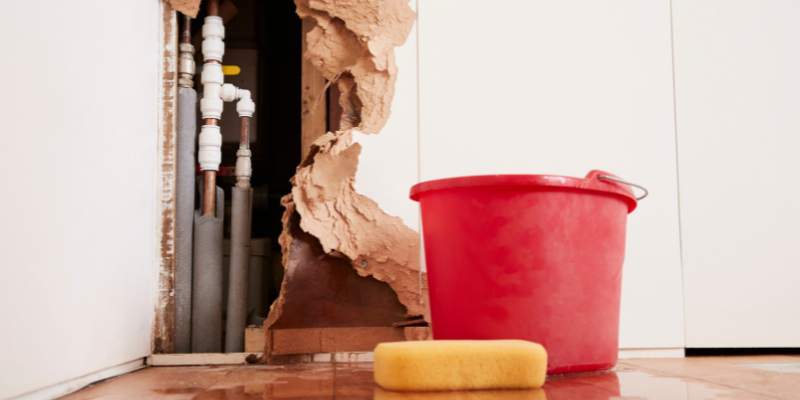
A ceiling stain the size of a dinner plate can cost a Georgia seller five figures, or it can cost nothing. Same mark, same house. What separates those two outcomes is mostly what you do in the first two weeks after you spot it.
Sell a House with Water Damage in Georgia: Where Do You Start?
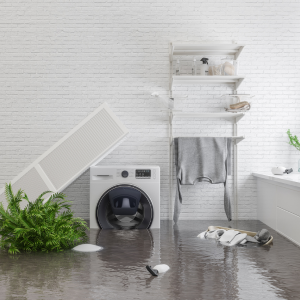
Most plans run in the same order. Dry it out, patch the drywall, repaint, then list it looking fresh. That order holds up until a contractor pries off a baseboard and finds soft subfloor. Now you’ve got an open wall, a scope that doubled, and no firm start date for the rest of the work. I’ve watched that sequence swallow a summer.
Grab your camera before anybody starts demolition. Photograph it all while it’s still wet: the source, the staining, the buckled flooring, the contents. Your insurance carrier pays on evidence, not on your description three weeks later. Call the carrier before anything hits a dumpster.
Be thorough, because you get one shot at photographing a house in its damaged state. Shoot wide photos of each affected room so an adjuster can see where the damage sits. Then go close. The stain pattern on the ceiling, the separated seams in laminate flooring, the rust line on a water heater, the swollen particleboard under a vanity. Take a slow video walkthrough and narrate what you’re seeing and when you found it. Pull back a corner of carpet and photograph the pad. If you or the restoration tech has a moisture meter, ask for those readings in writing. Adjusters have come back to me for them weeks later. Save a cut piece of wet drywall or a section of ruined baseboard in a garage corner instead of sending every scrap to the landfill on day one.
Keep a plain log too. Date you found it, who you called, what they said, when they showed up. Sellers who keep that log almost never lose an argument with a carrier or a buyer later. Sellers who rely on memory usually do.
Then get two numbers in hand. One written estimate from a restoration outfit, and one honest read on what the property is worth in exactly the condition it sits in today. Be specific when you ask for that second number. Plenty of people will tell you what the house is worth fixed up. That figure gets sellers into trouble, because it assumes somebody spends the money and the months to get there. On every house like this I’ve bought, the fixed-up number never matched what the seller actually got. Ask what a buyer would reasonably pay knowing about the wet crawl space. Ask what nearby houses in rough shape actually closed at.
Redfin’s Georgia data put the statewide median sale price at $371,663 in July 2026, up 1.8% year over year, with a median of 59 days on market. Two months of showings is a long time to carry a house with a wet crawl space. And that’s the median for houses in ordinary shape, photographed well and priced sensibly. A listing with a moisture problem sits on the long end of that range while the mortgage, taxes, insurance, and power bill keep arriving on schedule.
Not long ago I sat with two adult children in Marietta whose mother had just moved into assisted living. A slow supply line under her kitchen sink had dripped for months while she was in and out of the hospital. The garage was still stacked with her late husband’s fishing rods. They didn’t want a renovation. They wanted the house resolved before the next tax bill came.
Neither of them lived in Cobb County. One drove in from Chattanooga on weekends to meet contractors who didn’t always show, and the other was handling their mother’s care schedule. What they needed wasn’t a higher price. They needed a date on the calendar they could plan around, and somebody to take the fishing rods and the rest of the contents off their list entirely.
That’s a legitimate goal, and it changes which selling path makes sense. Get clear with yourself first about what you’re optimizing for: the highest number, the shortest timeline, or the fewest decisions. Those three rarely point the same direction. Most of the bad outcomes I see come from a seller chasing all three at once.
Not sure the repair math is worth it? We’ll look at the house exactly as it sits and give you a cash offer with no obligation. That gives you a real number to hold your repair estimate against. Send us the address through our contact page, or call (706) 670-6543.
What’s Really Causing the Water Damage in Your Home?
Misread the source, and you’ll pay for the same repair twice. Fresh paint over an active leak gets you about one rainy week in this state.
Water gets into Georgia foundations, and I say that after years of crawling around under houses across the metro. Clay soil holds moisture tight against a foundation instead of letting it drain away. Gutters that dump at the corner of the house will soak a basement wall for years before anything shows inside. Older in-town neighborhoods like Kirkwood and East Point have plenty of block foundations that seep every spring. Crawl spaces here stay humid enough to rot joists without a single visible drip. Left long enough, that moisture stops being a drying problem and turns into a footing problem, which is where selling a house with foundation problems in Georgia picks up.
Do you know where the water came in, or only where it showed up on the ceiling?
Water travels. It runs along the top of a ceiling joist, follows a pipe through a wall cavity, and drops out somewhere with no plumbing above it at all. So the honest first step is a walk with a flashlight, starting above and outside the stain rather than at the stain itself. Check the room directly overhead. Check the attic on a dry day, then again during a hard rain if you can. Outside, walk the perimeter in a downpour. Watch where the downspouts discharge and whether the grade slopes toward the house. Look for mulch or a flowerbed built up above the foundation line over the years.
The tells usually show before the drip does. A musty smell in a closet on an exterior wall. Hardwood that cups or crowns in one area. Chalky white residue on a basement block wall. Doors that stick in one season and swing free in another. Rusted tack strip where carpet meets a wall. Spot any of those and check under the house or behind the wall before you commit to a cosmetic fix.
What hides inside the walls fools people just as easily. A failed water heater, a hairline crack in a supply line, a clogged HVAC condensate drain: each one can run for weeks inside a wall cavity. Air handlers sitting in attics are a particular Georgia specialty. A stopped-up condensate line up there quietly ruins the ceiling of the room below it during the first real stretch of August heat. Washing machine hoses, refrigerator ice maker lines, and toilet supply valves round out the list of things that fail slowly and expensively.
Storms are a different animal. Remnants of tropical systems still reach Valdosta and Albany with real rainfall, and creeks through Atlanta’s older basins swell fast when three inches lands in an afternoon.
Flooding sits outside a standard homeowners policy in almost every case, and that surprises sellers mid-claim. Coverage for it comes through a separate flood policy. If your house has ever taken in creek or street water, pull whatever claim paperwork exists now, because a buyer’s lender may ask for it later. Same goes for anything a previous owner filed. Ask your agent for the policy number and the loss run. Lenders ask for both, though investor home buyers in Savannah paying cash skip the lender step entirely. Claim history follows the property, and a buyer’s insurance agent can sometimes see more about your house than you can.
Do You Have to Disclose Water Damage When Selling in Georgia?
A seller in Savannah’s Ardsley Park called me after her buyer’s inspector traced a patched basement leak she’d never brought up. The contract died on day nine of due diligence. She hadn’t lied to anybody. She’d decided a fixed problem was a closed subject.
Georgia leans on caveat emptor, so buyers carry the duty to inspect. That doctrine has a limit, and Nolo’s summary of Georgia seller obligations lays it out: a seller with special knowledge of a defect the buyer can’t reasonably find has a duty to speak up. You also can’t answer a direct question dishonestly or hide evidence behind a fresh coat of paint. No statute makes you fill out a form. Most sales here use the Georgia Association of Realtors disclosure statement anyway, and it asks direct questions about water intrusion, drainage, and past repairs. Answer those honestly, in writing, and the disclosure turns from a risk into a shield.
Practically, write down what you know. The date of the leak, what caused it, who fixed it, what they found. Keep receipts and invoices in one folder. A documented repair reassures a buyer far more than silence does, and silence is what gets renegotiated at day nine.
The word doing the work here is know. Nobody expects you to be an inspector, and you aren’t required to guess at what’s behind a wall you’ve never opened. If you truly don’t know whether the crawl space has taken water, the answer is that you don’t know, and a note explaining why beats a confident checkmark in either box. Sellers get hurt in the gap between what they knew and what they wrote down.
Estate and inherited sales sit in an awkward spot, because the person selling often never lived in the house. Say so plainly if that’s you. Hand over whatever invoices and warranties your parent or grandparent left behind, and resist the urge to speculate. Some of the smoothest estate closings I’ve been part of came with a shoebox of old receipts and one typed page: here’s everything the family knows, here’s what we don’t.
Build that folder before you go under contract, not after an inspector hands over a report. Plumber’s invoice, remediation certificate, drying log, before-and-after photos, permit paperwork. Give the buyer a copy up front. A buyer who gets that packet on day one reads a stain as a solved problem. One who hears about it from an inspector on day nine reads it as something you tried to keep quiet. That buyer pushes for price concessions out of suspicion far more reliably than out of actual damage.
Repair It or Sell As-is?
Run the numbers before you run to a contractor. Get the repair estimate in writing first, then sit with it for a day.
Water damage restoration averaged about $3,860 nationally in 2026, with most jobs landing between $1,400 and $6,400 for an event caught early. Once the water has sat a while, you’re into drywall, insulation, flooring, and sometimes framing, and reconstruction like that runs $10,000 to $30,000. Basement waterproofing around Atlanta averages roughly $4,000, and an exterior system that requires excavation costs several times that. Mold remediation is its own line item, and any lender-financed buyer will want it handled before closing.
Repairs make sense when the source is fixed, the damage is cosmetic, and you have the cash and the calendar to do it properly. A clean, dry, permitted repair usually returns more than it costs on a retail listing.
Selling as-is makes sense when the damage is structural, when you’re short on cash, when you’re managing the property from another state, or when the clock matters more than the last few thousand dollars. It also makes sense when the repair would force you to move out, which plenty of Georgia families can’t do mid-school-year. An as-is buyer takes the repair on, and the closing doesn’t wait for a contractor. If the water is only one line on a longer punch list, selling a house that needs repairs in Georgia covers the wider version of this same call.
Three questions usually settle it. Can you fund the whole scope, including the part nobody has found yet, without a loan or a credit card you’ll regret? Can you absorb the calendar if the job runs long, which on water work it very often does? Do you have the bandwidth to manage a contractor, meaning phone calls, change orders, and days when the crew doesn’t show? Yes to all three points toward repairing. A no to any one of them usually points the other way.
Watch out for the half-repair. It’s the most expensive version of both options. New paint and new flooring over a source nobody corrected doesn’t read as a fixed house to an inspector. It reads as a covered-up one, and it invites the exact suspicion you were trying to avoid. So repair the cause first, dry the assembly, document the drying, then close the walls back up. Can’t do it in that order? You’re better off selling the problem honestly than dressing it up.
Price the holding period into the comparison too, because it’s real money and sellers routinely leave it out. During the work, you’re still paying the mortgage, the property taxes, the insurance, the utilities running the dehumidifiers, and possibly a second housing payment somewhere else. If the house sits empty, call your insurance agent before you assume you’re covered. Vacancy changes how a lot of policies behave.
One more thing sellers underestimate. A financed buyer’s appraiser can flag active water intrusion. FHA and VA files are strict about it. HUD wants a basement free of dampness, and the VA wants ponding in a crawl space corrected. That can stall a retail sale for weeks after you’ve signed. A flagged appraisal doesn’t quietly go away either. The condition gets noted, the repairs get required, and now you’re doing the renovation anyway, on a lender’s schedule, with a buyer’s earnest money and your own moving plans riding on it.
How Cash Buyers Price a Water-damaged Georgia House
An as-is offer isn’t a mystery number. It works backward from what the house will be worth repaired, minus the repair budget, minus holding costs, minus the buyer’s margin.
Three things move a buyer’s offer more than anything else: how bad the damage is, how long the water has been active, and what comparable dry houses on your street sold for. A Macon ranch with a two-week-old supply line leak prices very differently from a Columbus split-level that sat vacant under a failed roof through two winters. Where the house sits matters too, and sellers on the coast can read the local version of this on our page for cash home buyers in Brunswick, GA.
Bring the boring paperwork. Insurance claim numbers, remediation invoices, plumber reports, any moisture readings you have. Every document you hand over removes a guess, and guesses get priced conservatively.
You don’t need to clean it, empty it, or fix anything first. Photos of the real condition, bad parts included, get you a more accurate number than photos that flatter it. Leave the fishing rods, the paint cans in the basement, the furniture nobody wants. Hauling it out yourself costs you a weekend and a dumpster and almost never moves the offer.
Fire some questions back. Is the number you’re given the number that shows up on the closing statement, or does it get revisited after a walkthrough? Ask for proof of funds. Who covers the closing costs? Find out whether the buyer intends to close or pass the contract to somebody else, because that changes how certain your closing date really is. Any cash home buyers in Georgia worth your time will answer that one plainly. Georgia requires a licensed attorney to run the closing, so ask which firm, and confirm the title search is already underway rather than starting the week of closing. Ask what would push that date back, and who gets to decide it.
Then ask for flexibility where you need it. If you want extra time after closing to finish clearing the house, or you’d rather close after a parent’s move-in date or a school term ends, say so early. Those terms are usually easier to get than a higher price, and for a lot of sellers they’re worth more.
Frequently Asked Questions
Can I sell a house in Georgia with active mold?
Yes. No state law bars the sale, and Georgia doesn’t regulate mold remediation at all, though you still have to disclose what you know and answer the disclosure form honestly. Cash and investor buyers buy properties with mold routinely. Financed buyers usually can’t close until it’s remediated, which narrows your buyer pool to people paying cash.
Will my homeowners insurance cover the damage before I sell?
Depends on the source. Sudden internal failures like a burst pipe are commonly covered. Gradual seepage, long-term leaks, and rising flood water generally are not. Flood damage needs a separate flood policy. Call your carrier before demolition starts, because tearing out evidence can complicate a claim.
Do I have to tell a buyer about a leak I already repaired?
If you know about it, put it on the disclosure form. A repaired, documented leak rarely kills a sale. An undisclosed one an inspector finds almost always does.
How fast can I close on a water-damaged house in Georgia?
A cash sale can close in one to three weeks, limited mostly by the title search and the closing attorney’s calendar. Financed sales average under 40 days nationally, and an FHA or VA file on a damaged house often runs 45 days or more.
Does water damage have to be fully dried before closing?
Not for a cash as-is sale. Prime Cash Home Buyers is taking the condition as it stands. On any loan-backed sale, expect the lender to require the property to be dry and repaired first.
Maybe you’re staring at a repair estimate you can’t cover. Or it’s a tax bill, or a job that starts in another city next month. Whatever’s pushing the decision, it gets easier once you know what your house is actually worth as-is. We buy houses all over Georgia in whatever condition they’re in, water damage and all. Finding out the number costs you nothing. Reach out to Prime Cash Home Buyers with the address and a few honest photos, and you’ll get a straight answer you can hold up against your other options.
Helpful Georgia Blog Articles
- Sell Your House During A Divorce In Georgia
- Maximize Your Profit: How To Sell A House As-is In Georgia
- Selling Your Home In Foreclosure In Georgia
- How to Sell a House in Probate in Georgia
- Who Pays the HOA Fees at Closing in Georgia
- How to Sell a Condemned House in Georgia
- How to Sell an Apartment in Georgia
- Can Sellers Back Out of Real Estate Contracts in Georgia
- How to Sell Your Fire-Damaged House in Georgia
- Selling a House With Foundation Problems in Georgia
- Can You Sell a House With a Lien in Georgia
- Capital Gains Tax After Selling a House in Georgia
- How to Sell a House Without a Realtor in Georgia
- Can You Sell a House with Asbestos in Georgia
- Selling a House That Needs Repairs in Georgia
- Can a Seller Refuse Repairs After a Home Inspection?
- How to Sell a Water-Damaged House Fast in Georgia